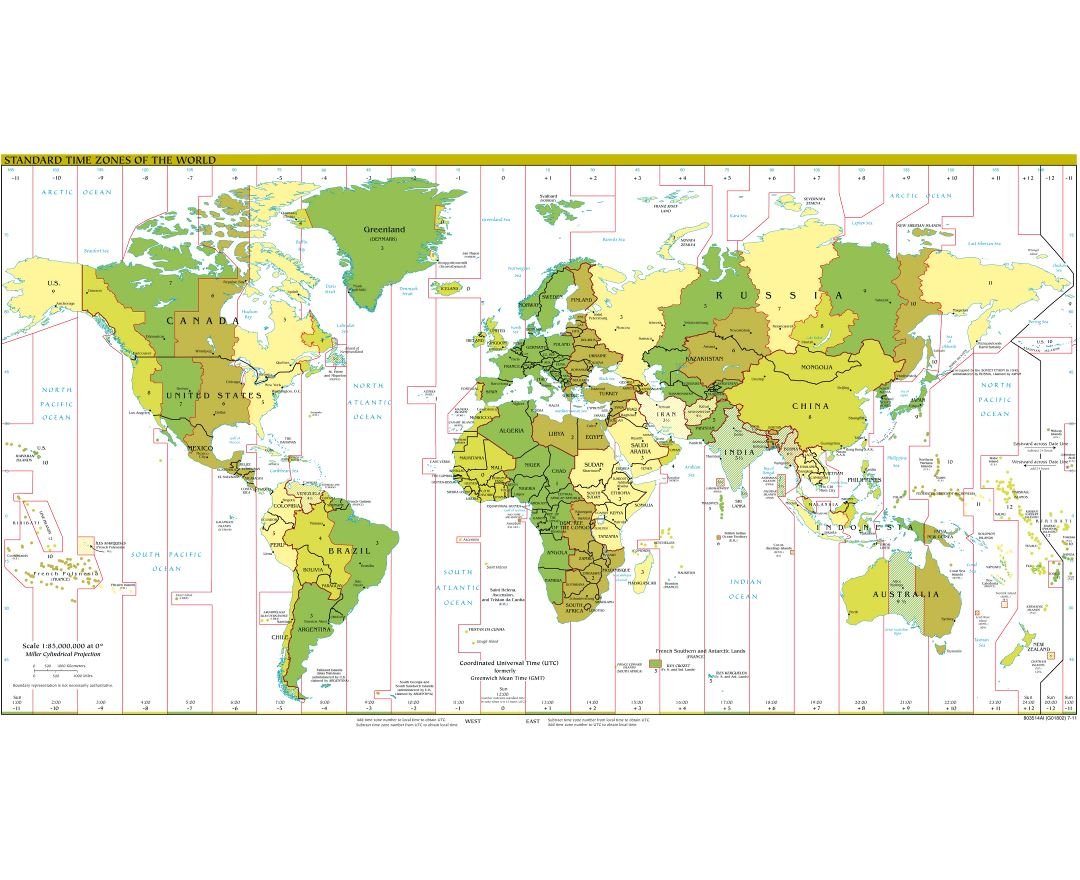
For fans of the beautiful game, few things are more frustrating than missing a crucial match simply because you miscalculated the kickoff time. Whether you're tracking your favorite European giants from across the Atlantic or following a local derby while on holiday, mastering "Horarios del Partido y Zonas Horarias" (game times and time zones) is absolutely essential. It's the secret weapon that ensures you're always in front of the screen, not scrambling at the last minute.
The world of football operates on a global clock, but your viewing experience is anchored to your local one. This guide will equip you with the knowledge, tools, and strategies to confidently navigate the complex web of international match schedules, ensuring you never miss a goal, a tackle, or a moment of glory, no matter where in the world you are.
At a Glance: Your Quick Guide to Mastering Match Times
- Local Time is King: Always assume published kickoff times are for the host city.
- Convert, Don't Guess: Use reliable time zone converters (Google, dedicated apps) to find your local viewing time.
- Daylight Saving is a Trap: Be extra vigilant for schedule shifts during spring and fall.
- Official Sources are Best: Rely on league websites, club announcements, or reputable sports media for accuracy.
- Calendar Sync is Your Friend: Add matches directly to your digital calendar for automatic reminders.
- Broadcasters ≠ Kickoff: Remember that broadcast start times often include pre-match analysis, not the actual whistle.
The Global Game, Local Clocks: Why Time Zones Matter More Than You Think
Imagine waking up eager to watch your team, only to realize the game already ended hours ago. This all-too-common scenario highlights the critical role of understanding time zones in today's interconnected football landscape. With leagues spanning continents and fans tuning in from every corner of the globe, a kick-off time in Madrid means something entirely different in New York, London, or Sydney.
The fundamental challenge lies in the concept of "local kickoff time." When a match is advertised for, say, 20:00, that time almost invariably refers to the local time in the city where the game is being played. It’s not your local time, nor is it a universal time. This single detail, if overlooked, is the root cause of countless missed matches. The sheer volume of games across different leagues, from LaLiga and the Premier League to Serie A and the Bundesliga, means there's almost always a ball rolling somewhere, but knowing when that somewhere translates to your here requires a systematic approach to time zone conversion.
Decoding Match Schedules: Your Go-To Strategy
Becoming a master of football schedules isn't about memorizing every time zone; it's about developing a consistent strategy and knowing which tools to trust.
Understanding "Local Kickoff Time": The Golden Rule
As we've established, the golden rule of tracking match times is to always assume the published kickoff is the local time in the stadium's location. This is your anchor point. For instance, if you see "Rayo Vallecano vs Real Oviedo 20:00," that's 8 PM local time in Vallecas, Spain. If "Manchester United vs Tottenham Hotspur 19:30" pops up, that's 7:30 PM local time in Manchester, England.
This means you need to know not just the time, but also the location of the match. For example, considering the provided fixtures:
- FC Barcelona vs Mallorca 22:15: This is 10:15 PM in Barcelona, Spain (likely Central European Summer Time, CEST, or Central European Time, CET, depending on the season).
- FC Arsenal vs Sunderland 22:00: This is 10:00 PM in London, England (likely British Summer Time, BST, or Greenwich Mean Time, GMT).
These two games, despite being relatively close in published time, have different actual global start times because of their distinct local time zones.
The Power of Time Zone Converters (and How to Use Them Right)
Once you have the local kickoff time and location, your next step is conversion. Thankfully, you don't need a world clock and a calculator. Modern tools make this process incredibly straightforward.
How to Use Them:
- Identify the Source Time: Input the published kickoff time (e.g., 22:15).
- Identify the Source Time Zone: This is crucial. Use the city or country of the match. Most converters will let you select "Barcelona, Spain" or "London, UK."
- Identify Your Target Time Zone: Select your current location (e.g., "New York, USA," "Kuala Lumpur, Malaysia").
- Hit Convert: The tool will instantly provide your local viewing time.
Common Pitfalls to Avoid:
- Assuming Automatic Conversion: Don't assume a website or app has already converted the time for you, especially if it's not specifically tailored to your location settings. Always look for a clear indication.
- Forgetting the Date: Sometimes, especially for very late or very early games, the conversion might push the game into the next calendar day in your local time. Always confirm the date as well as the time.
- Relying on Outdated Converters: Ensure your chosen tool is up-to-date with Daylight Saving Time changes.
To truly master this, understanding how to convert time zones effectively is a core skill for any global football fan. It's less about raw calculation and more about smart tool usage.
Daylight Saving Time: The Sneaky Schedule Changer
Daylight Saving Time (DST) is arguably the biggest culprit behind missed football matches. Twice a year, many countries shift their clocks forward or backward by an hour. This means the time difference between your location and the match location can suddenly change, even if neither of you explicitly changed your clocks that week.
For example, if the UK is on BST (GMT+1) and Spain is on CEST (GMT+2) during summer, there's a 1-hour difference. When the UK reverts to GMT (GMT+0) and Spain reverts to CET (GMT+1) in autumn, the time difference remains 1 hour. However, if you are in a country that doesn't observe DST, or observes it on different dates, the time difference can unexpectedly jump or shrink by an hour, throwing off your established mental calculations.
Always make a note of when DST changes occur in both your region and the major footballing nations you follow. Reputable time zone converters and online match schedule providers typically account for these changes automatically, which is another reason to favor them over manual calculations.
Navigating Today's Top Matches Across the Globe (with Examples)
Let's put these principles into practice by looking at a sample of today's fixtures and how they translate across different time zones. For these examples, let's assume the local times provided in the research are for a specific typical matchday, and we'll illustrate conversions to common fan locations.
- Reference Time Zones:
- London, UK: GMT/BST
- New York, USA: EST/EDT (GMT-5/GMT-4)
- Central Europe (e.g., Berlin, Germany): CET/CEST (GMT+1/GMT+2)
- Jakarta, Indonesia: WIB (GMT+7)
LaLiga's Evening Kickoffs (Spain)
LaLiga often features late evening kickoffs, which can mean very late nights or early mornings for fans further east or west.
- FC Barcelona vs Mallorca 22:15 (CET/CEST):
- In London: 21:15 (GMT/BST)
- In New York: 16:15 (EST/EDT) - a convenient afternoon kick.
- In Jakarta: 04:15 the next day (WIB) - an early morning affair.
- Earlier in the day, a match like Celta de Vigo 1 Osasuna 2 might have already concluded, its result showing up for global fans as they start their day, highlighting how different regions experience "today's matches" at different points.
Premier League's Prime Slots (UK)
The Premier League spreads its games, but evening kickoffs are common, attracting massive global viewership.
- Manchester United vs Tottenham Hotspur 19:30 (GMT/BST):
- In London: 19:30 (GMT/BST) - prime evening viewing.
- In New York: 14:30 (EST/EDT) - a nice mid-afternoon slot.
- In Jakarta: 02:30 the next day (WIB) - a very late night/early morning for dedicated fans.
- FC Arsenal vs Sunderland 22:00 (GMT/BST):
- In London: 22:00 (GMT/BST)
- In New York: 17:00 (EST/EDT)
- In Jakarta: 05:00 the next day (WIB)
The Premier League also features multiple games concurrently, such as Burnley vs West Ham United, FC Fulham vs Everton, AFC Bournemouth vs Aston Villa, and Wolverhampton Wanderers vs Chelsea, all potentially kicking off at the same local time (e.g., 22:00 GMT/BST), making for a busy night for UK fans but potentially a logistical nightmare for broadcasters trying to cover all simultaneously.
Bundesliga and Serie A Action (Germany & Italy)
Germany's Bundesliga and Italy's Serie A also offer compelling football, often with their own distinct schedule patterns.
- SV 07 Elversberg vs Hertha Berlin 19:00 (CET/CEST):
- In London: 18:00 (GMT/BST)
- In New York: 13:00 (EST/EDT)
- In Jakarta: 01:00 the next day (WIB)
A game like Hellas Verona 0 SC Pisa 0, which might have ended earlier in the day, is already a closed chapter for fans in the far east by the time their evening begins.
Other European Leagues: A Snapshot
Football is truly global, and understanding how league schedules are determined for smaller or less-publicized leagues is just as important for their dedicated fans. From Croatia's 1. HNL to Turkey's 1. Lig and Slovenia's 1. SNL, games are happening continuously.
- HNK Hajduk Split vs NK Slaven Belupo 23:15 (1. HNL, Croatia, CET/CEST): A very late kick-off in Split, meaning a late night across Europe and potentially a morning start for fans in the Americas.
- AS Sariyer vs Sivasspor 17:30 (1. Lig, Turkey, TRT, GMT+3): An early evening game in Turkey, hitting prime viewing hours for fans in the Middle East and early afternoon for Europe.
- Primorje vs Bravo 21:00 (1. SNL, Slovenia, CET/CEST): A typical European evening slot.
These examples underscore why a reliable system for tracking "Horarios del Partido y Zonas Horarias" is indispensable for any serious football enthusiast.
Tools & Resources: Your Ultimate Time-Tracking Toolkit
In the digital age, you're spoiled for choice when it comes to tools that simplify tracking global match schedules. The right combination of resources can make all the difference.
Dedicated Football Apps & Websites
Many platforms specialize in live scores and schedules, often providing localized times automatically once you set your region.
- OneFootball: This app, which our context research highlighted, is excellent. It provides match schedules, live scores, news, and often local broadcast information, usually converting times to your device's local setting by default.
- Official League Websites: The official sites for LaLiga, Premier League, Bundesliga, Serie A, etc., are the ultimate authoritative sources. They often have dedicated schedule sections that allow you to filter by date or convert to your local time.
- Major Sports News Outlets: Reputable sites like Mundo Deportivo (another source from our research), ESPN, BBC Sport, Sky Sports, and others provide comprehensive schedules. Be sure to check if their times are local to the game or already converted for their primary audience region.
- Google Search: A quick search like "Barcelona vs Mallorca kickoff time" will often yield an immediate, localized result directly from Google's integrated sports information, often including a link to the best streaming services for football broadcasting the match.
Calendar Integrations
This is perhaps the most powerful tool for proactive fans. Many football apps and websites allow you to "add to calendar" or "subscribe to league schedule." This pushes the match details, including kickoff time (automatically converted to your device's time zone), directly into your Google Calendar, Apple Calendar, or Outlook Calendar.
The benefit here is twofold:
- Automatic Conversion: Your calendar handles the time zone math.
- Built-in Reminders: You can set alerts to notify you 15 minutes, 30 minutes, or an hour before kickoff.
For specific high-profile matchups, knowing where to watch Real Madrid vs Pachuca is as crucial as knowing when it kicks off. Adding these details to your calendar ensures you have both covered.
Live Score Services
While not strictly for planning viewing, live score apps (like OneFootball) are invaluable for tracking games that have already started or concluded, especially those you might have missed due to time zone differences. They confirm results quickly, letting you catch up on the action even if you couldn't watch live.
Common Pitfalls and Pro Tips for the Global Fan
Even with the best tools, a few common mistakes can trip up even the most seasoned football fan. Being aware of these, and adopting some pro tips, will elevate your viewing game.
Don't Trust Every Unofficial Source
The internet is a vast place, and not all information is created equal. While fan forums and social media can be great for discussions, they are not reliable sources for kickoff times. Always cross-reference with official league sites, club websites, or established sports news outlets. Incorrect "Horarios del Partido y Zonas Horarias" can spread quickly, leading to widespread disappointment.
Broadcaster Schedules Aren't Always Kickoff Times
A major channel might advertise "Premier League coverage starts 19:00," but the actual kickoff might be 19:30. Broadcasters often include pre-match analysis, interviews, and buildup. If you only tune in at the advertised "start time" of the broadcast, you might miss the crucial opening minutes of the match itself. Always look for the specific "kickoff time" rather than the general "broadcast start time."
Always Double-Check Last-Minute Changes
Football schedules are dynamic. Matches can be postponed due to weather, rearranged for TV scheduling, or even shifted due to unforeseen circumstances. A date and time set weeks ago might change at the last minute. Reliable apps and calendar integrations are usually good at updating this, but a quick check on matchday is always prudent.
Pro Tip 1: Set Reminders and Alarms
This sounds obvious, but it's the most effective way to combat time zone confusion. Once you've converted the time to your local schedule, set a physical alarm or a calendar reminder. If you're passionate about watching international football, a dedicated reminder system is your best friend.
Pro Tip 2: Know Your Home Time Zone Backwards and Forwards
It seems simple, but many people don't actually know their exact time zone offset (e.g., GMT-5, EST). Knowing this definitively helps when interacting with people from different zones or using less sophisticated converters.
Pro Tip 3: Master Your Ultimate Matchday Preparation Checklist
Beyond just times, ensure your streaming service is working, your snacks are ready, and any potential household distractions are managed. A complete preparation ritual reduces stress and enhances the viewing experience.
Beyond Today: Planning Your Future Football Viewing
The principles of understanding "Horarios del Partido y Zonas Horarias" don't just apply to today's matches. They are fundamental for planning your entire football season. By consistently applying these strategies—using reliable sources, understanding local times, leveraging conversion tools, and being mindful of Daylight Saving Time—you build a robust system that ensures you're always connected to the global game.
Whether it's the thrill of a midweek European clash, a weekend derby, or an international tournament, confidently knowing when and where to tune in will deepen your enjoyment of football. Don't let time zones be a barrier; let them be a challenge you've expertly overcome. Embrace the global clock, and you'll never miss a moment of the world's most beloved sport.